Brain Smart
OverviewJamma Wellbeing sought to scale its award-winning Brain Smart programme, based on Agneta Johansson's 2024 book Brain Smart: Improving Wellbeing by Understanding Your Brain, into a cross-platform mobile application. The goal was to translate this neuroscience-based education model and its five-step SODIA framework into a structured, interactive product, transforming a facilitator-led programme into a self-guided digital experience capable of reaching a much wider audience.
My Role
Information Architecture
Hi-fi Design
Design Systems
Interaction Design
Illustration & Character Design
User Flow Design
Motion Design (Rive)
Prototyping
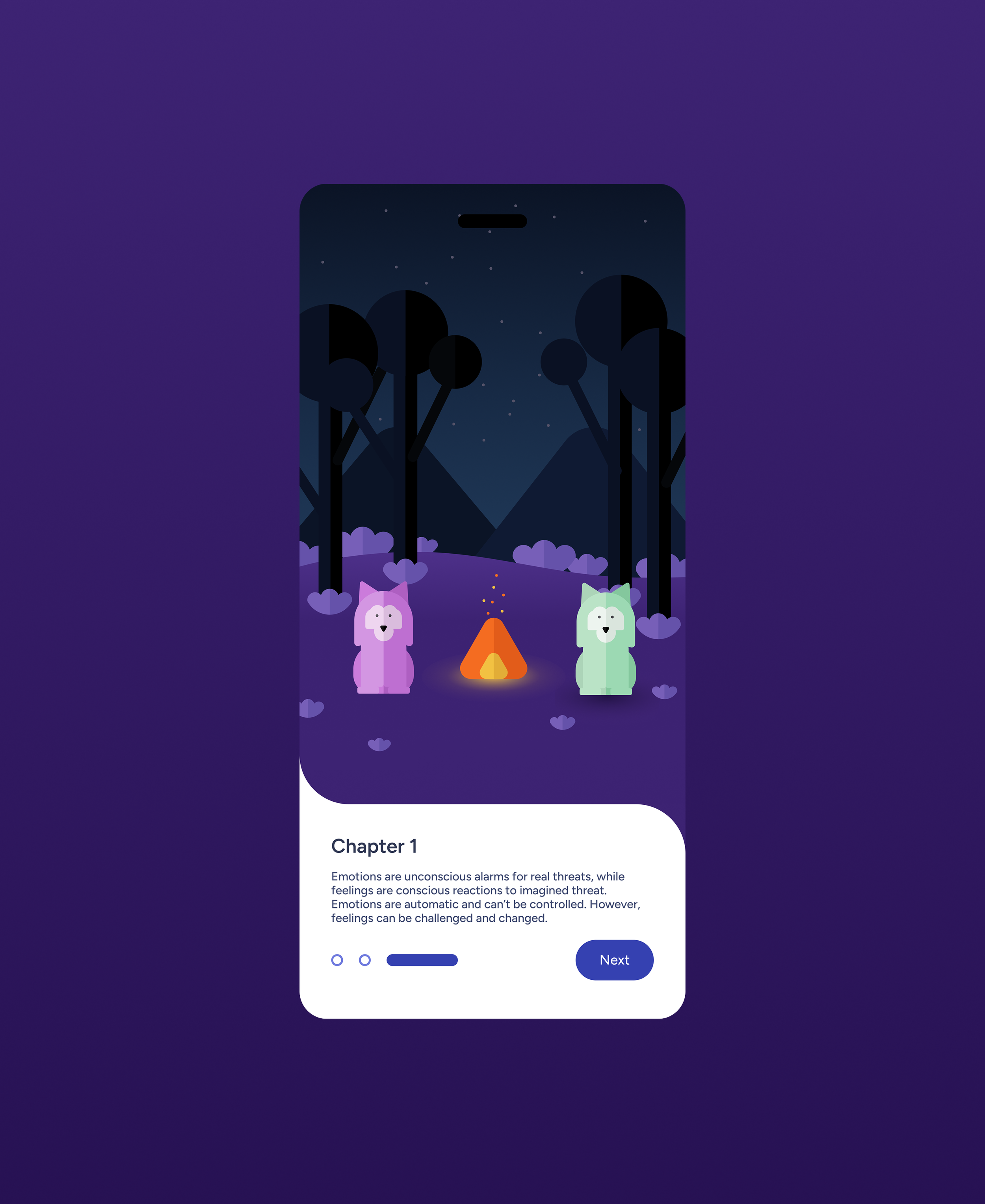
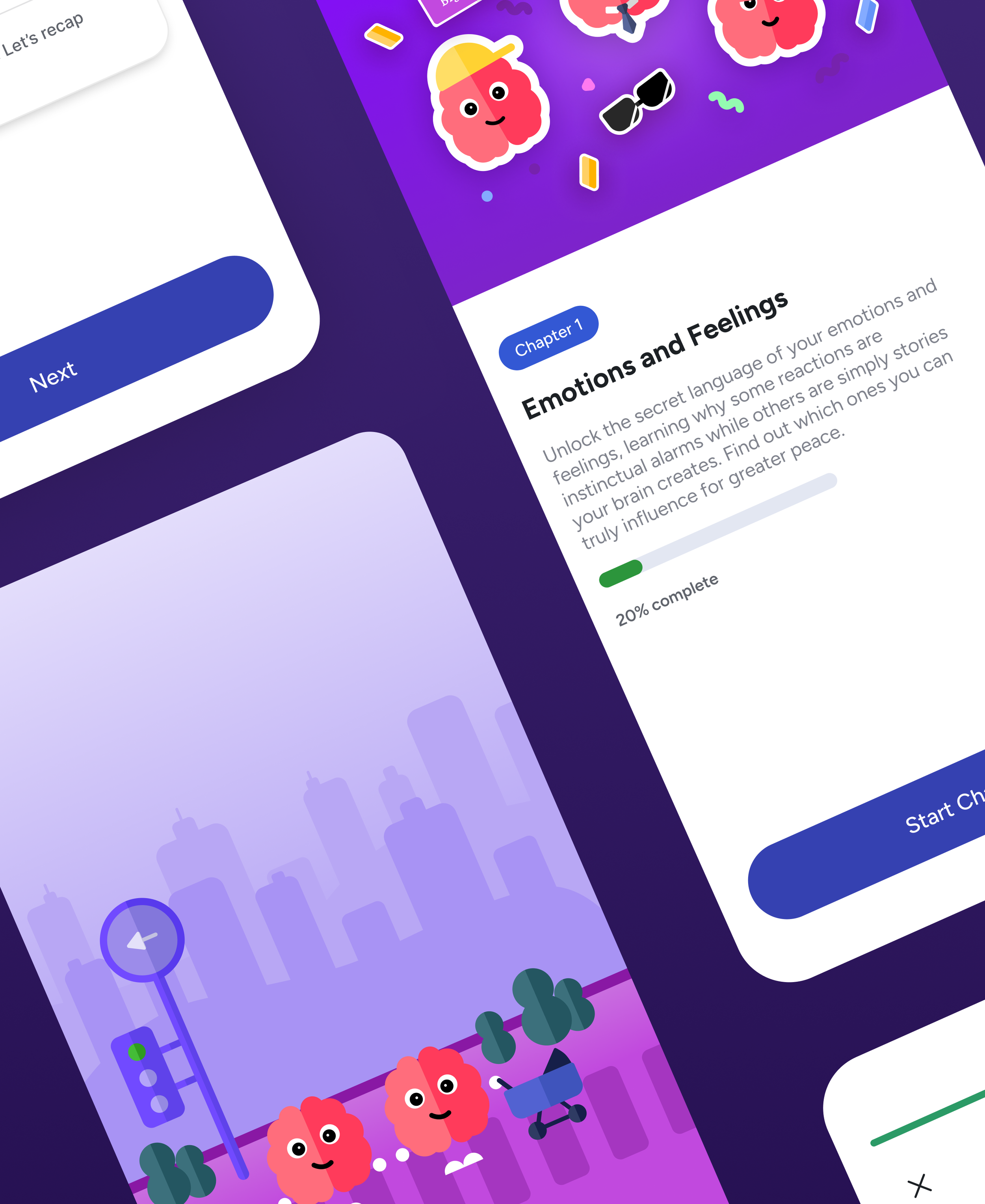
Brief
The project needed a clear information architecture to present complex concepts in a digestible format across connected screens, while keeping the instructional flow of the original material intact. The book's text was carefully reviewed and condensed to improve clarity and readability on mobile.
At the same time, the five-step SODIA framework was reimagined as a guided journalling feature, with interaction patterns designed to encourage reflection and active engagement. The experience had to balance structured progression with user autonomy, integrating responsive animations powered by Rive, similar to those used by Duolingo, to create a dynamic and supportive learning environment. The goal was a cohesive system where learning, interaction, and motion work together to strengthen understanding and support habit formation.
My Role
Information Architecture & Content Design
The core challenge was taking a carefully structured book and turning it into a mobile learning experience without losing what made it work. This meant breaking complex neuroscience concepts into digestible chapters and making sure users moved through the content in the right order. Quizzes and animations were brought in selectively, only where they genuinely added something to the learning rather than just making it feel more interactive.
Interaction Design & User Flows
A big part of the role was designing the core interaction flows, including reimagining the SODIA framework as a guided journalling experience. This meant structuring timed prompts, emotional labelling, reflection inputs, and annotations into a flow that felt natural and repeatable, and that could support habit formation over time. The trickiest part was the Investigate step, finding the right balance between guiding the user through their reflection and giving them enough space to reach their own conclusions.
What makes you different?
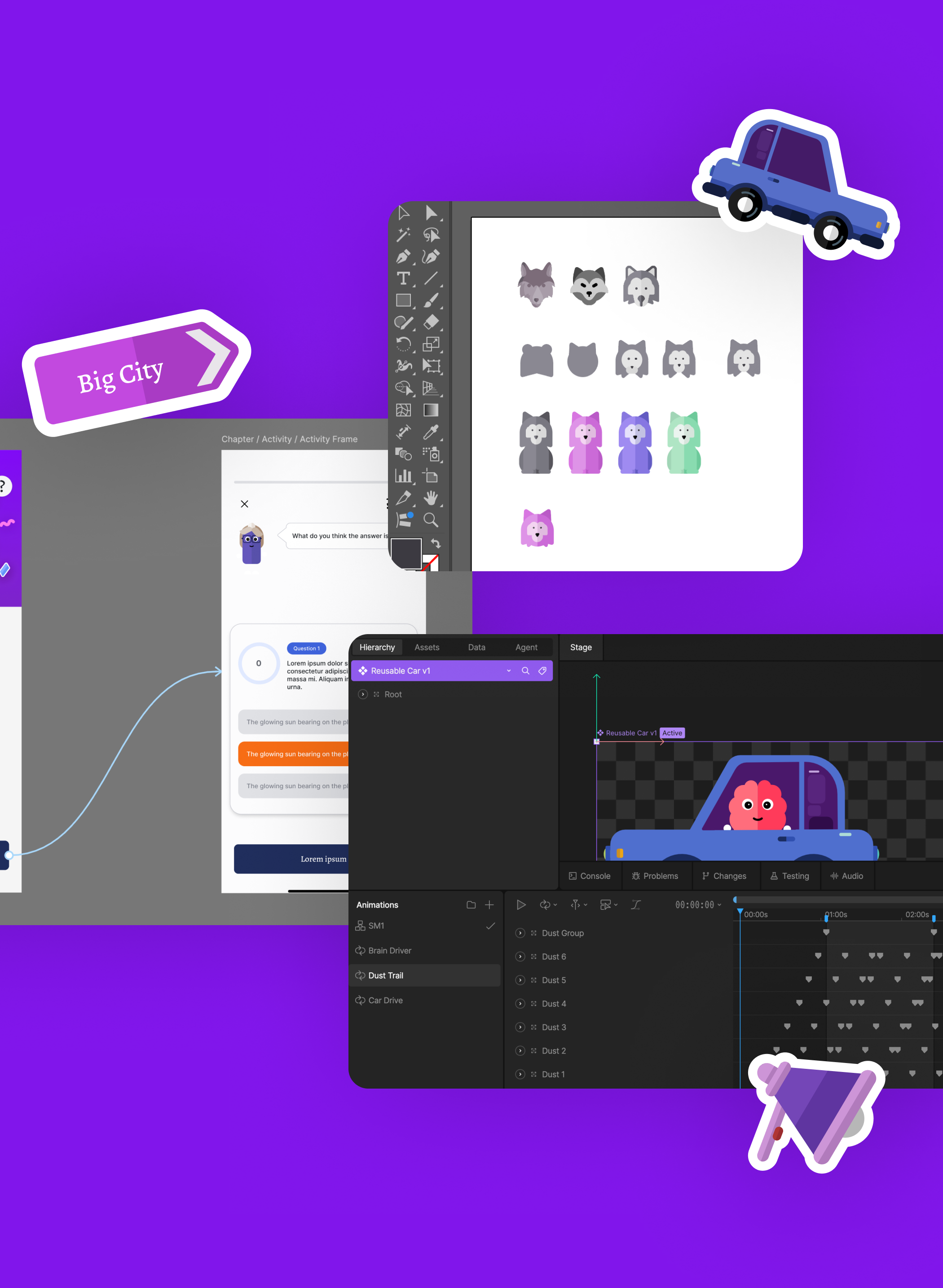
The visual world of Brain Smart was built from the ground up, including the main mascot, supporting illustrations, and icons used throughout the app. The mascot's expressions and poses needed to feel genuinely encouraging without tipping into patronising territory, which took some careful thought given the range of people who would be using it. Key moments were animated in Rive using state machine logic, so the character could respond to what the user was doing and make the experience feel a little more alive.
Privacy-Focused UX Design
The SODIA journal captures personal reflections and emotional states, which makes it some of the most sensitive data an app can handle. Consent flows, data structures, and privacy controls were designed to make sure that information was handled transparently and responsibly. This was particularly important given that the platform would be used by young people and individuals in custodial environments.
Main Product Design Challenges
-
Brain Smart was built for everyone, from teenagers navigating school anxiety to adults in custodial settings. That range became a core design constraint. The app had to feel appropriate and trustworthy across a very wide audience, threading the line between accessible and patronising, and between warm and overly clinical. Age rating and content sensitivity added further considerations, particularly given the platform's use in safeguarding-sensitive environments.
-
The book follows a deliberate sequence where concepts build on each other, and the SODIA process only makes sense once the foundational neuroscience is in place. The app had to respect that without feeling like a glorified e-reader. Every interactive element needed to earn its place, used only where it genuinely helped understanding or added something meaningful to the experience.
-
An animated character in a mental health context carries real risk. Done poorly it feels gimmicky or patronising; done well, as Duolingo shows, it builds genuine emotional connection across sessions. Animations were built in Rive with state machine logic, allowing the character to respond to user input. Getting this right required close collaboration between design and development.
-
The SODIA journal captures emotional states and personal reflections, among the most sensitive data an app can handle. Designing the consent flows and privacy controls required particular care, especially given the platform's likely use by minors and people in the criminal justice system.
-
Prisons have restricted and inconsistent internet access. Where the app was intended to support in-person programme sessions in institutional settings, it needed to account for offline use, low-bandwidth environments, and the reality that many users would only access it intermittently, often on a shared device.
Impact and Outcome
From a design perspective, this project combined the conceptual complexity of a public health intervention with the craft demands of a consumer mobile product. Getting the interaction design right mattered not just for engagement, but for whether users in difficult circumstances could build healthier habits. That was a meaningful standard to design against.
The app shipped in January 2026, roughly a year after development began, bringing Jamma Wellbeing's award-winning programme into a scalable digital format for the first time. Before the app, Brain Smart had reached 960 individuals across 30+ custodial institutions, developed 434 Mental Health Ambassadors, and trained 73 peer instructors through labour-intensive, in-person delivery. Now communities without access to a trained facilitator can engage with the programme directly too.